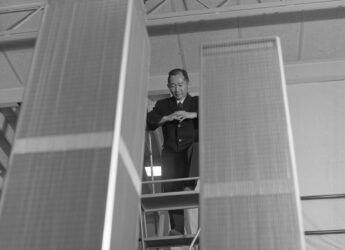
25 Years After the World Trade Center Fell, an Architect’s Legacy Is Still Being Written
Our reporter’s personal journey in search of buildings by Minoru Yamasaki finds some abandoned, some celebrated.
 https://nytimes.com/2026/10/19/arts…
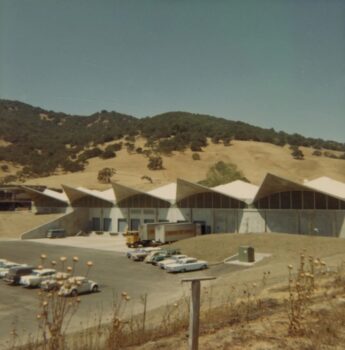
Joe Gebbia and the Eames Institute, part two
It’s not just the Eames Institute that has a Joe Gebbia problem; it might be the Eames Foundation and the Eames Office too.
https://punchlistmag.com/p/joe-gebb…

Where Are the Democratic Socialists of America Going?
The rise of DSA over the last decade is one of the most striking developments in American politics. The group has successfully navigated the US electoral system but continues to face considerable challenges in rooting itself in the US working class.
https://jacobin.com/2026/10/dsa-soc…

Home is where the jellyfish glows: Finland finally warms to nature-loving modernist Alvar Aalto
His egalitarian homeland used to harbour reservation against the architecture star. But with 13 new Unesco listings and a new exhibition in Helsinki, Aalto’s work is finally getting the recognition it deserves
https://theguardian.com/artanddesig…
Architects in Wonderland
Decades ago James Marston Fitch argued that the reuse of existing buildings should be prioritized over the construction of new ones. His thesis, at once simple and radical, is more relevant than ever.
https://placesjournal.org/article/a…

The Eames Institute has a Joe Gebbia problem
What would Charles and Ray make of his praise for Alex Jones and the John Birch Society?
https://punchlistmag.com/p/the-eame…
Who Shapes the Territory? Or, Why Urban Planning Does Not Exist
By the late 20th century, even the professional establishment was forced to admit the collapse of the planning myth.
https://commonedge.org/who-shapes-t…

How “Edinburgh” Reimagines Time to Tell a Story of Trauma
Alexander Chee’s début novel, published twenty-five years ago, collapses past and present in a brilliant account of abuse and its aftermath.
https://newyorker.com/books/second-…
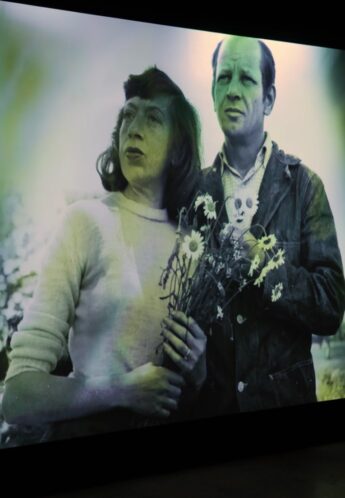
A Knockout Show Resets the Record With ‘Krasner and Pollock’
She had to settle for the kitchen as her studio but Lee Krasner finally gets her share of the spotlight at the Metropolitan Museum of Art.
https://nytimes.com/2026/09/29/arts…
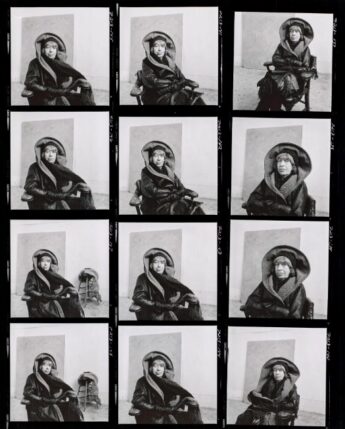
A Superb American Artist Is Finally Getting Her Due
The artist herself — her joy, her pain, her sensuality, her anger, her defiance — exploded across canvases that covered a half-century of work.
https://nytimes.com/2026/09/25/opin…
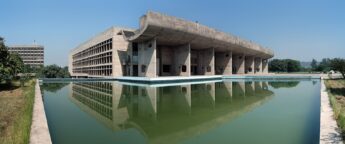
Chandigarh at 73: How a City Outgrew Its Utopia
In the early 1950s, a wide, sloping plain at the foot of the Shivalik Hills in northwest India was cleared of over 50 agrarian villages. From that newly blank slate rose Chandigarh, a city conceived not merely as a regional capital for a post-Partition Punjab, but as a bold statement of identity for a newly independent nation.
https://commonedge.org/chandigarh-a…

Modern Remnants: Calque Studio and the Race Against Tehran’s Architectural Erasure
Nestled at the foot of the Alborz mountain range, Tehran grows beneath a ridge that protects and suffocates it at the same time. The same landscape that blocks the winds and traps pollution over the city also holds, along its slopes, centuries of disputes over this strategic territory.
https://archdaily.com/1184461/moder…
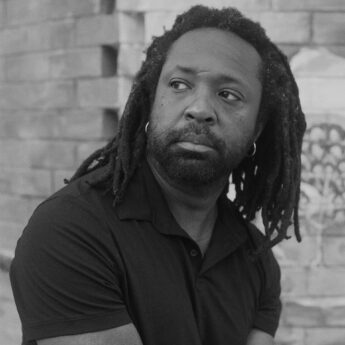
“The Disappearers” Stages the Pain and Pleasure of Jamaican Gay Life
Marlon James’s new novel follows a group of gay men who seek love, connection, and restitution after a bloody homophobic attack.
https://newyorker.com/magazine/2026…
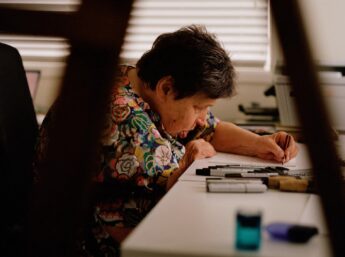
Susan Te Kahurangi King’s Way of Seeing
At seventy-five, she may be New Zealand’s greatest living artist.
https://newyorker.com/magazine/2026…

How Far Will the Trump Administration Go to Deport Mahmoud Khalil?
Khalil, a legal permanent resident, protested Israel when he was a student at Columbia. Now the Trump Administration is trying to kick him out of the country.
https://newyorker.com/magazine/2026…
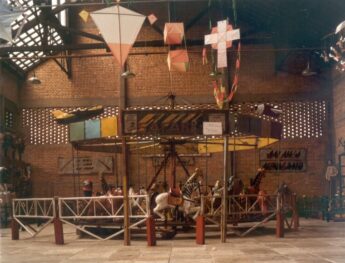
Lina Bo Bardi and Popular Making: Craft and Accessibility in Design
In an era where digital fabrication and automation are increasingly present in architectural practice, manual craft is often seen as a luxury item—restricted to high-end projects whose clients can afford extended deadlines and collaborative processes requiring constant dialogue with artisans.
https://archdaily.com/1184102/lina-…

The Mentor
“Ignore the rules, do what you want to do, don’t leave a paper trail,” the reporter David Cay Johnston said, listing the lessons Cohn taught Trump. “And if somebody gets onto you, rat out other people to save yourself.”
https://newyorker.com/magazine/2026…
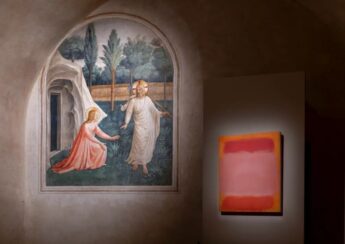
Rothko in Florence
A Rothko is not just about color; it is about a spatial setting that either allows the painting to open up or denies the possibility.
https://brooklynrail.org/2026/07/ar…

Explore a rare collection of LGBTQ+ children’s books dating back to 1969
The Mechanics’ Institute, one of the oldest cultural institutions on the West Coast, is now home to a thrilling archive of LGBTQ+ children’s literature.
https://lithub.com/explore-a-rare-c…
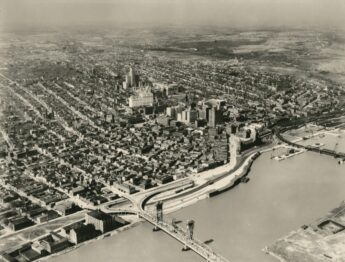
How William Kennedy found his beat
Kennedy’s problem was that he revered literature so intently that, by his own account, his early attempts at writing fiction tended to be inert and “ponderous.” The newsroom beat that out of him.
https://harpers.org/archive/2026/09…

The Doulas Who Help Us Die
In an aging America, thousands of people have adopted a new vocation: supporting others as they confront the end of life.
https://newyorker.com/magazine/2026…

The Fractured State of Architecture Journalism and Criticism
I am an architect, who helps make things, and I write about architects who make things…It’s a unique and sometimes awkward position, tinged with a conflicting mix of empathy and cynicism.
https://commonedge.org/the-fracture…
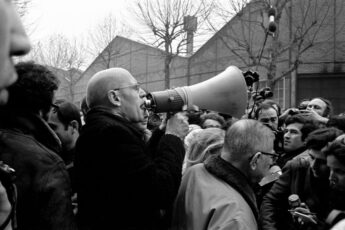
How a Band of Difficult Thinkers Shaped One Author, and the World
In “The Frenchmen,” Emily Eakin traces the rise and fall of postmodernist philosophy, and the surprising ways its influence lingers.
https://nytimes.com/2026/07/21/book…

Fairfield Porter’s Lush, Lonely Vision of the World
The painter was rich and cloistered, and used color like few others before or after him.
https://newyorker.com/magazine/2026…

The 25 Sculptures That Define the Modern Age
Four artists and a curator debate the most important works since the end of World War II.
https://nytimes.com/2026/08/04/t-ma…

To Find Happiness, I Stopped Talking. It Helped.
I handed over my laptop and phone and, suddenly, there was nothing to do.
https://nytimes.com/2026/08/01/opin…